




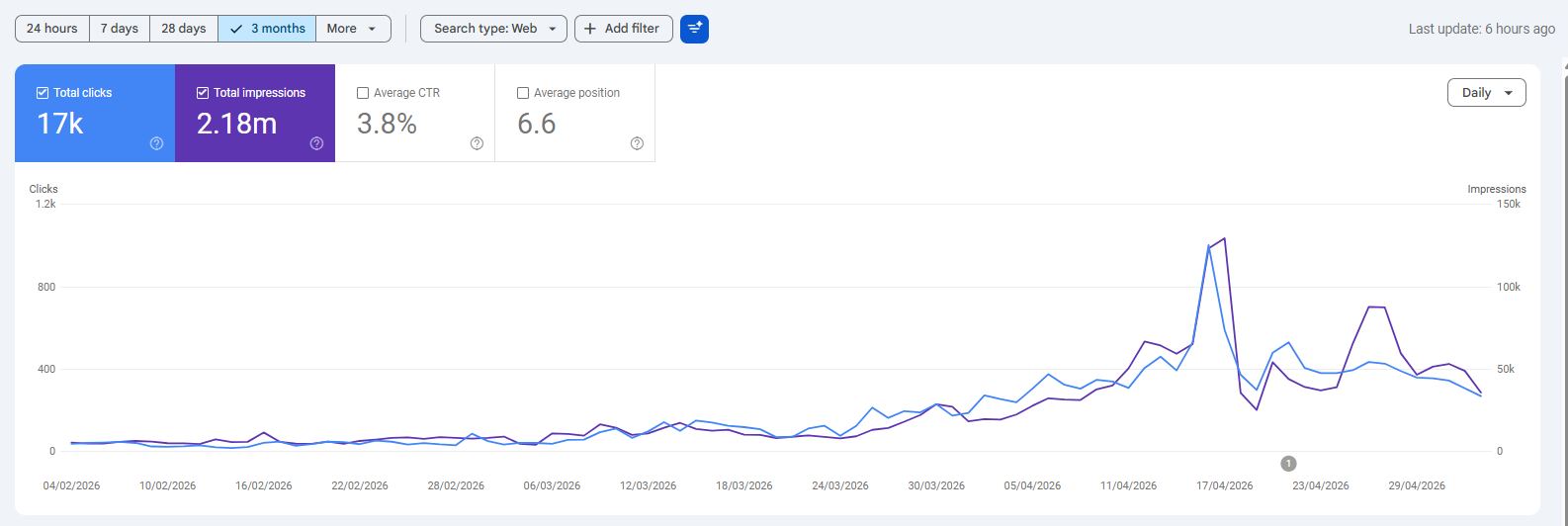
We started this project with a clear objective — transform a website with almost zero visibility into a scalable traffic and lead-generating asset using a structured SEO system. Within just 90 days, the website grew to over 2.18 million impressions and generated more than 17,000 clicks from Google Search. This growth wasn’t driven by hacks or temporary tactics. Instead, it was the result of a focused approach combining search intent, content strategy, internal linking, and authority building.
At the beginning, the website had no keyword rankings, no consistent traffic, and no clear content direction. There was no topical authority, no proper internal linking structure, and no pages designed to convert visitors into leads. In simple terms, the website existed, but Google didn’t trust it enough to rank it.
To solve this, we implemented a system-based SEO strategy. First, we conducted a deep audit to identify hidden issues such as intent mismatch, weak content structure, and missing conversion elements. Instead of relying only on tools, we manually analyzed how users interact with content and what Google expects from high-ranking pages.
Next, we built a keyword strategy focused on opportunity rather than just search volume. We targeted low-competition, high-intent keywords along with trending queries that had the potential to scale quickly. This allowed us to achieve faster rankings and build early momentum.
Content played a major role, but not in a random way. We developed a consistent content publishing system aligned with topic clusters and user intent. Each piece of content was designed not only to rank but also to connect with the user and guide them toward action. Alongside this, we implemented a strong internal linking structure to distribute authority across pages and improve indexing speed.
We also focused on building trust signals through structured backlinks, profile links, and brand mentions. This helped improve domain credibility and allowed Google to recognize the website as a reliable source of information.
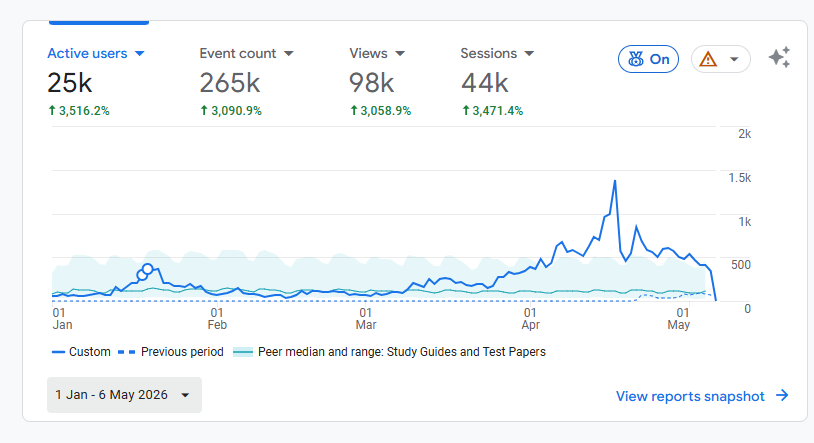
As a result, the growth curve started slowly in the first month, picked up in the second month, and saw a sharp increase in the third month. This is where SEO compounding came into effect — more pages ranked, impressions increased rapidly, and traffic scaled consistently.
This project clearly shows that SEO is not about tools or shortcuts. It’s about building a system that aligns content, intent, structure, and authority in the right way.